
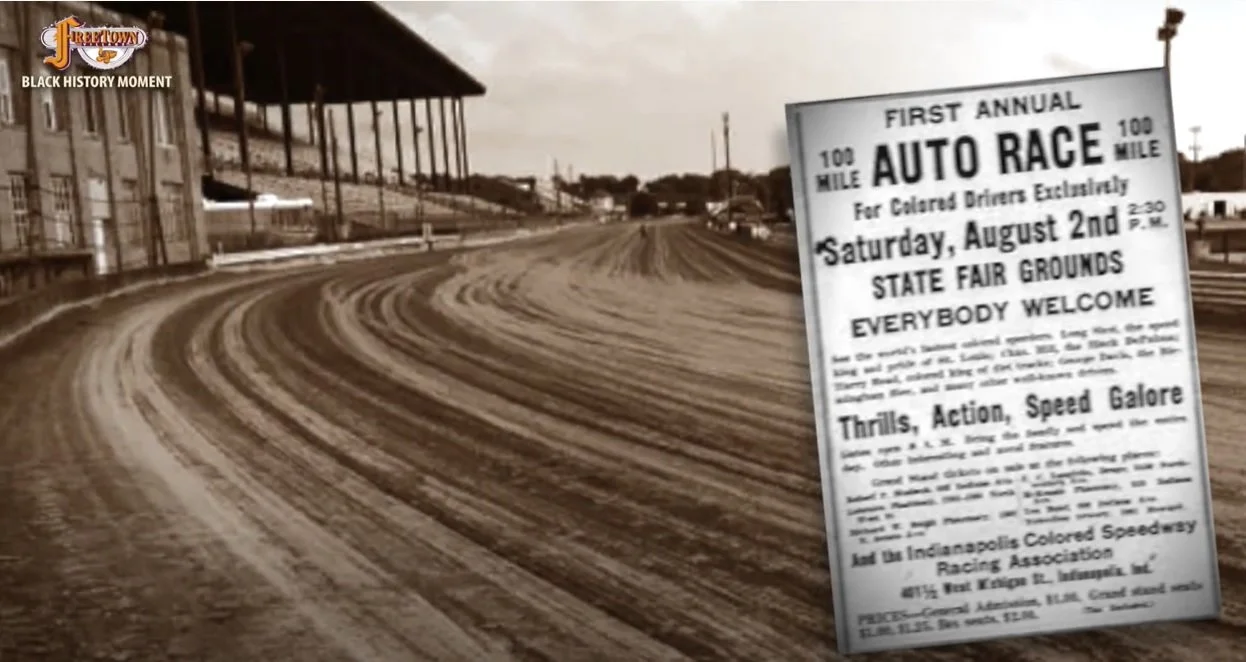
Gold and Glory Sweepstakes Highlighted African American Race Car Driving
The roar and excitement of cars racing around the track at the Indianapolis Motor Speedway was alluring to many.
But Black Americans were barred from participating. After being told no by the American Automobile Association - the sport’s governing body - multiple times, they created their own auto racing event.
The roar and excitement of cars racing around the track at the Indianapolis Motor Speedway was alluring to many.
But Black Americans were barred from participating. After being told no by the American Automobile Association - the sport’s governing body - multiple times, they created their own auto racing event.
It was called the Gold and Glory Sweepstakes and it was held annually by the Colored Speedway Association on the dirt oval track at the Indiana State Fairgrounds.
It was an event that drew Black elites from throughout the country. From 1924 to 1936, as many as 15,000 spectators attended the race each summer.
The 100-mile race included a grand prize of $2,500, and drew dozens of Black drivers to compete. But only 20 would participate in each race.
Indianapolis native Charlie Wiggins became the star of the race. He earned the nickname "Speed King" for winning the Gold and Glory Sweepstakes four times, driving a car he built from junk parts. The car ran on a special fuel of airplane fuel and castor oil.
Wiggins became known as The Negro Speed King”— more than six decades before Willie T. Ribbs would become the first Black driver to qualify for the Indianapolis 500 in 1991.
Wiggins lived to see one of his protégés, Sumner "Red" Oliver, become the first African-American official mechanic in Indy 500 history as a member of the 1973 Patrick Racing Team.
Wiggins’ racing career ended in 1936 after a 13-car crash that resulted in the loss of his right leg and eye. Despite his injuries and constant pain, he continued to mentor promising young drivers, including some 500-Mile Race winners, and campaigned against segregation in the auto racing industry.
The Colored Speedway Association ceased to exist in 1936 with its biggest star gone as a result of the crippling accident and the onset of the Great Depression.
Founders of the Colored Speedway Association were African American businessmen Harry Dunnigton, William Rucker, George Lemon, Earnest Jay Buffet and Alvin D. Smith. Also founding members were Oscar E. Schilling and Harry A. Earl.
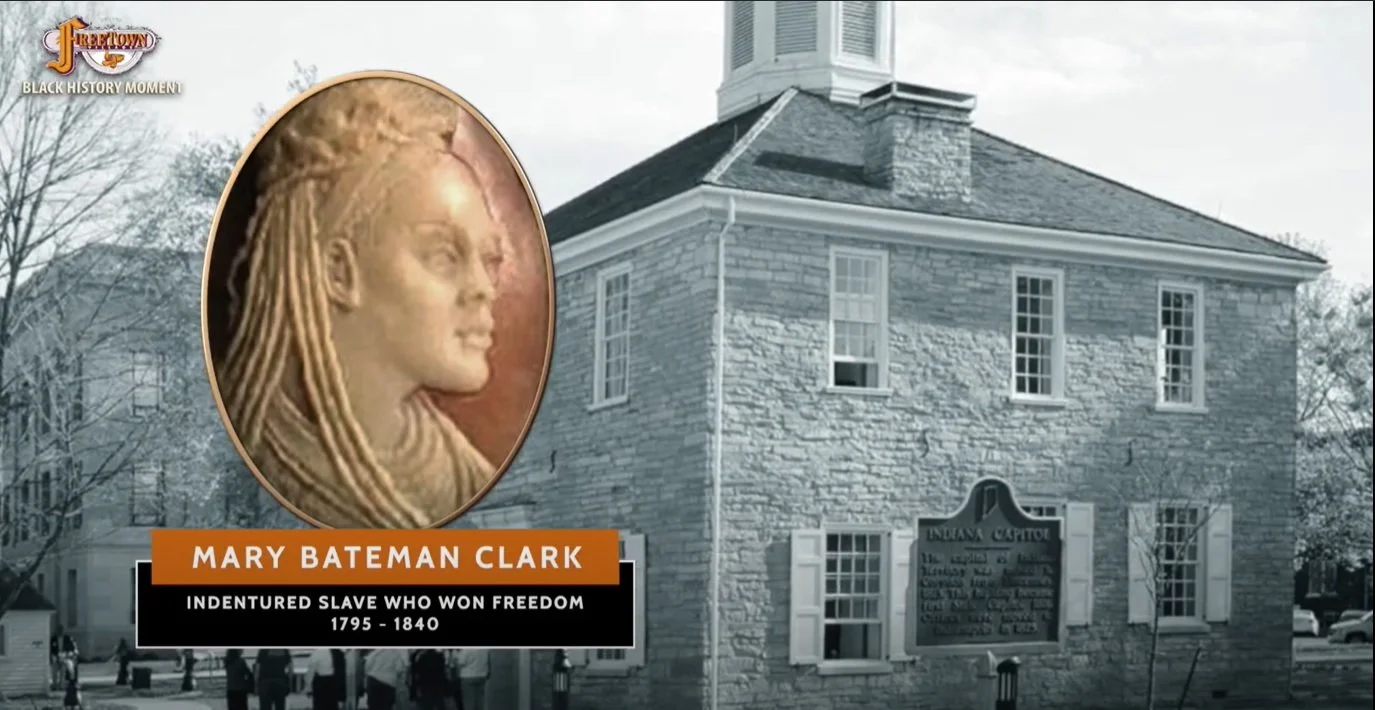
Mary Bateman Clark
Though it was a free state, Indiana condoned slavery and it was practiced by the most influential people in the state, including elected officials, lawyers, religious, business and civic leaders.
A catalyst in ending the practice was Mary Bateman Clark.
Mary Bateman Clark Helped End Slavery, Indentured Servitude in Indiana
Though it was a free state, Indiana condoned slavery and it was practiced by the most influential people in the state, including elected officials, lawyers, religious, business and civic leaders.
A catalyst in ending the practice was Mary Bateman Clark.
Clark was an enslaved teenager when she was brought to Vincennes, Indiana from Kentucky in 1814.
She was freed from slavery, but immediately indentured to General Washington Johnston, one of the most influential men in the state. She and others were indentured even though the 1787 Northwest Ordinance and 1816 Indiana Constitution banned slavery and indentured servitude.
Unlike voluntary indentures from Europe, Blacks were forced to sign indenture contracts they could not read, binding them to work without pay for 30, 40 even 90 years. If they refused to sign, they could be returned to slavery in the South. Clark was one of several indentured servants represented by Attorney Amory Kinney in what is now known as “freedom suits.”
Clark lost her case in the Knox County Circuit Court in Vincennes, appealed that judge’s decision and won her appeal in 1821 in the Indiana Supreme Court, releasing her from servitude. Her case gave others who were indentured a precedent they could cite when they took their cases to court.
An historical marker in her honor is located at the Knox County Courthouse in Vincennes.
While Mary Clark’s case addressed indentured servitude – the most widely used form of slavery in Indiana - Polly Strong’s case, also first heard in Knox County Circuit Court, focused on whether or not there could be slavery in Indiana.
Strong’s case, which included her brother, James, spanned four years. On July 22, 1820, the Indiana Supreme Court stated that, “…under our present form of government, slavery can have no existence in the State of Indiana….” The Supreme Court declared Polly Strong and her brother free residents of Indiana.
An historical marker in honor of Strong is located in Corydon, where the state Supreme Court once met. Though the Clark and Strong cases had been decided, many enslaved people in Indiana had to continue using the courts to be freed.
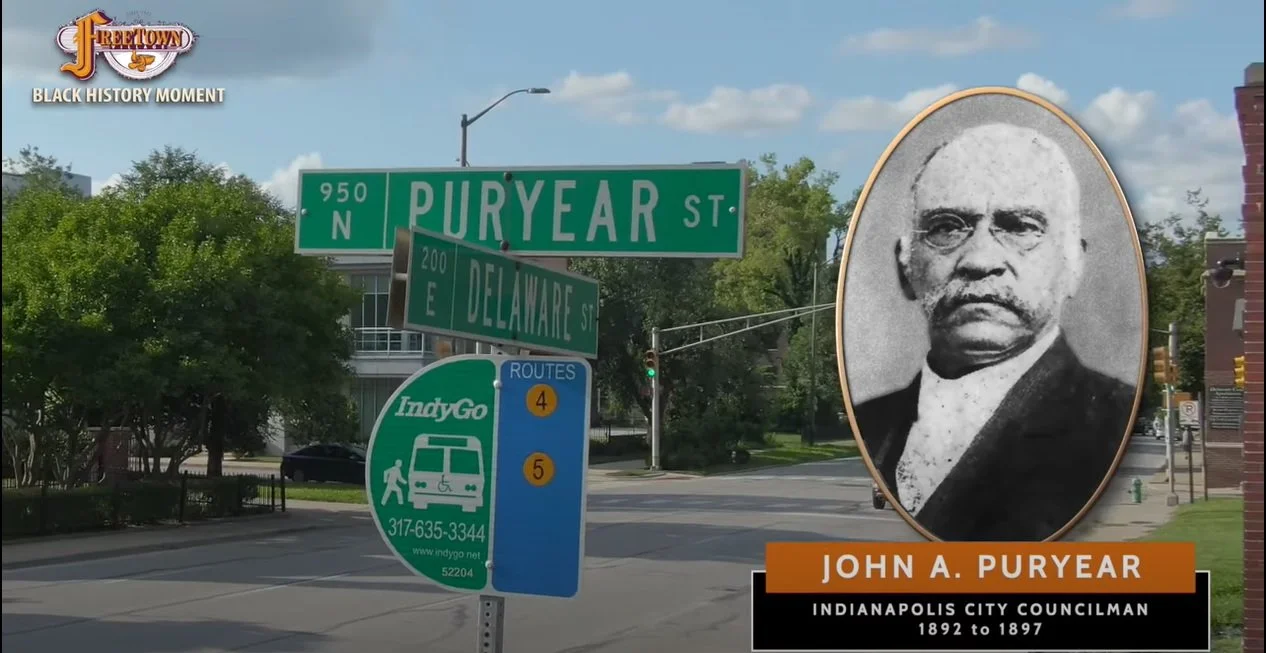
John Puryear
If not for an ordinance proposed by one of the first African American city councilmen in Indianapolis, Capitol Avenue would be Tennessee Street and Senate Avenue would be Mississippi Street.
If not for an ordinance proposed by one of the first African American city councilmen in Indianapolis, Capitol Avenue would be Tennessee Street and Senate Avenue would be Mississippi Street.
While all major streets in Downtown Indianapolis were named for states, these major streets, where numerous African Americans once lived, received their names from John A. Puryear who wanted those street names in his district changed because they were named for slave states. Puryear had once been enslaved in North Carolina, his home state.
Puryear also wanted to name a four-block long downtown street Midway, but one of Puryear’s white peers on the council thought it best that the street be named for Puryear. That passageway became Puryear Street in 1895 and remains that name today. It is the first alley north of St. Joseph Street and runs from Pennsylvania Street near the Marion County Central Library to New Jersey Street in the Old Northside.
Serving on the council from 1892 to 1897, Puryear did far more than rename streets. He fought to have salaries of black city workers increased to be in line with salaries of white workers. He also made sure people in predominantly black communities had access to fire alarm box keys so they could trigger the alarm in the event of a fire.
Puryear was a founding member of the Indianapolis Business League. The league fought for equal rights for businesses. As a founding member of the Afro American Realty Company, he helped blacks obtain mortgages and home owner insurance when blacks were traditionally discriminated against by mainstream companies.
Puryear was himself a successful businessman. He started a packing and moving company, Puryear and Porter, which he operated with Will H. Porter, one of the co-founders of The Indianapolis Recorder. Puryear died in 1930 at age 75 and is buried in Crown Hill Cemetery.